This guide walks through the whole field: the major categories of motorcycle games, how virtual bike physics actually work, what hardware you need (spoiler: usually nothing special), and how to figure out which style suits you before you sink hours into the wrong one. No rankings that will age badly — just the fundamentals that stay true.



Game Guides
How to Choose the Best Motorcycle Games: A Beginner's Guide

Ask ten riders to name the best motorcycle game and you'll get ten different answers, plus a small argument about tire models. That's not because anyone is wrong. It's because "best" depends entirely on what you want out of the experience — a five-minute stunt run, a season of championship racing, or something that feels close enough to real riding that your forearms tense up.
Play these right now
Every game here runs free in your browser — no download, no account.
-
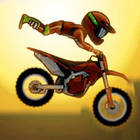
Moto X3M
4.3Moto X3M is a popular side-scrolling motorbike racing game developed by MadPuffers and sponsored by Silvergames.com.
-
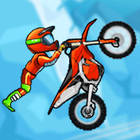
Moto X3M 2
3.8Moto X3M is a free dirt bike racing game where you have to ride a cool motorcycle on an obstacle course.
-

Moto X3M 5: Pool Party is a super fun dirt bike racing game an you can play it online and for free on Silvergames.com.
-

Motocross Challenge is a high-speed bike racing game that will get your adrenaline pumping.
-



Start with the Question: What Do You Actually Want?
Before looking at any title, it helps to name your goal. Most players fall into one of a few camps.
- Quick fun in short bursts. You want to open something, play for ten minutes, and close it. Browser and mobile games dominate here.
- Skill mastery. You enjoy repeating a track until you shave a second off your time. Stunt and trials games reward this obsessively.
- Realism. You ride in real life, or want to, and you care whether the front brake behaves properly.
- Freedom and exploration. You'd rather cruise an open map than run laps.
- Competition. You want to race real people, tune a bike, and climb a leaderboard.
Nothing stops you from wanting several of these. But knowing your primary motivation prevents the classic mistake: buying a hardcore simulator when what you really wanted was a stunt playground.
The Main Categories of Motorcycle Games
Arcade Stunt and Physics Platformers
These are the games where you ride a dirt bike through an obstacle course full of ramps, saw blades, collapsing bridges, and explosive barrels. The physics are simplified but consistent, the levels are short, and death is instant and cheap — you respawn in a second and try again.
The genre's best-known example on the web is the Moto X3M series, which built its reputation on tight level design and a scoring system based on time. You're not just finishing a level; you're finishing it fast enough to earn three stars, which usually means committing to jumps you'd rather brake for.
The sequel, Moto X3M 2, keeps the same core controls while introducing more elaborate trap sequences — the kind where you have to learn the timing of a moving hazard rather than just react to it. Later entries change the theme entirely; Moto X3M 5: Pool Party swaps industrial hazards for water slides, inflatable rings, and pool decks, which sounds cosmetic but genuinely changes how the ramps flow.
Why this genre is a great starting point: the control scheme is usually four keys or two thumbs. Accelerate, brake, lean back, lean forward. That's it. And yet those four inputs teach you a real concept — that a motorcycle's balance in the air determines how it lands.
Motocross and Off-road Racing
A step up in complexity. Motocross games put you on a dirt track with jumps, whoops (those washboard bumps), berms, and a pack of other riders. The skill is rhythm: matching your throttle and body position to the terrain so you don't lose momentum.
These games generally live on consoles and PC, though there are surprisingly capable mobile versions. Expect to learn scrubbing (flattening a jump to stay lower and faster) and preloading (compressing the suspension before a takeoff to launch higher).
Road Racing Simulators
This is the deep end. Simulators model tire temperature, weight transfer, brake balance, engine braking, and traction limits. You'll spend the first hour crashing constantly, and that's normal — a real sportbike is genuinely difficult, and the good sims don't hide it.
The reward is that improvement feels earned. When you finally hold a smooth line through a fast corner, you're doing something close to what a real rider does. These titles usually include large licensed bike catalogs and real circuits.
Trials and Precision Balance Games
Trials riding is about control at low speed: hopping over obstacles, balancing on a log, never putting a foot down. Games in this style strip away speed entirely and focus on throttle finesse and clutch control. Expect to spend a full minute inching a bike onto a rock ledge, then lose it in the last inch. They're small, quiet, and unusually addictive, and they'll teach you more about clutch control than any race will.
Open-world Games with Bikes
Plenty of large open-world games include motorcycles without being motorcycle games. You get a big map, no lap times, and the freedom to ride wherever. If your fantasy is a long road with nothing to prove, this is your category — just accept that the physics are usually forgiving and the bike is one option among many vehicles.
Endless Riders and Traffic Games
Mobile-first, usually free, built around dodging traffic or surviving as long as possible. The loop is simple and the sessions are short. They're not teaching you much about riding, but they're honest about what they are.
How Virtual Motorcycle Physics Actually Work
Understanding a few concepts will make you better at nearly every game in this space, from a browser stunt run to a full simulator.
Weight transfer is the big one. When you brake, weight shifts forward onto the front wheel. When you accelerate, it shifts back. Grip follows weight, which is why braking hard mid-corner tends to end badly — you've loaded the front tire past what it can hold while also asking it to turn.
Lean angle is how a motorcycle turns. It doesn't steer like a car; it falls into a corner in a controlled way. Simulators model this closely. Arcade games often abstract it into a simple left-right input, but the underlying idea still applies: more lean means less available grip for braking or acceleration.
Rider position matters more than beginners expect. In stunt games, leaning back raises the front wheel, and leaning forward drops it. That single mechanic controls your landing angle, and landing angle is usually the difference between clearing a level and eating dirt.
Momentum is the currency of off-road riding. Slowing down costs you far more than it does in a car, because a bike loses momentum quickly over rough ground and has only two small contact patches to claw it back with. Good players are the ones who don't waste speed.
Traction limits are the invisible ceiling. Every tire has a finite amount of grip, split between turning, braking, and accelerating. Ask for all three at once and you exceed the budget. This is sometimes called the traction circle, and simulators enforce it strictly.
Controls and Hardware: What You Really Need
The honest answer for most people is: whatever you already own.
- Keyboard. Perfectly fine for browser stunt games and most arcade titles. Four keys, no configuration.
- Touchscreen. Works well for mobile games designed around it. Look for games with adjustable button placement, since hand sizes vary a lot.
- Gamepad. The sweet spot for console and PC racing. Analog triggers give you gradual throttle and brake input, which is a genuine advantage over on/off keyboard keys.
- Racing wheel. Generally not ideal for bikes, since a wheel doesn't map naturally to countersteering. Some players use one for the pedals alone.
- Dedicated bike controllers. These exist and can be excellent, but they're a niche purchase for people already deep in the hobby. Don't start here.
If you're playing a simulator with a gamepad, spend ten minutes in the settings before you race. Reducing steering sensitivity and lengthening input smoothing often makes a huge difference, because a thumbstick moves much faster than a human body leaning off a bike.
How to Evaluate a Game Before You Commit
A few practical filters that work regardless of platform or release date:
- Watch unedited gameplay, not a trailer. Trailers are cut to look fast. Find a video of someone playing an ordinary race or level from start to finish.
- Check what the failure state looks like. Do you restart instantly, or sit through a loading screen? In a game where you'll crash hundreds of times, restart speed is a feature.
- Read what critics say about the physics specifically. Skip the score and search the review text for words like "front end", "grip" and "lean" — that's where reviewers get specific, and handling is the hardest thing to fix with a patch once a game has shipped.
- Look at the difficulty options. Good games in this space offer adjustable rider aids — traction control, anti-wheelie, braking assistance — so you can start assisted and remove help as you improve.
- Confirm the input support. Some titles are built entirely around gamepads; others handle keyboards well. Check before assuming.
- Try the free tier first. Browser stunt games and free mobile titles cost you nothing but time, and they'll quickly reveal whether you enjoy the core sensation of riding a virtual bike.
Building Skill: a Practical Progression
If you want to actually get good rather than just dabble, there's a sensible order.
Stage one: learn balance in a simple environment. Stunt games are ideal because the input set is tiny. Focus on one thing — controlling your bike's rotation in the air — until it's automatic.
Stage two: learn to be smooth. Move to something with analog throttle and brake. Practice applying inputs gradually rather than in bursts. Smoothness is the single biggest gap between a beginner and an intermediate player.
Stage three: learn lines. Pick one track and run it repeatedly with no goal except consistency. Where do you brake? Where do you begin leaning? A consistent lap is more valuable than a fast fluke.
Stage four: remove the aids. Turn off assistance one setting at a time, not all at once. Each removal is its own learning curve.
Stage five: race people. Human opponents force you to handle traffic, defend a line, and stay calm when someone divebombs your corner.
Common Beginner Mistakes
- Using the brake as an on/off switch. In anything with realistic physics, this locks the front wheel and ends your run.
- Turning and braking at the same time. The traction budget doesn't allow it. Brake in a straight line, then turn.
- Chasing the hardest game first. Difficulty isn't the same as quality. Starting with a punishing simulator teaches frustration, not technique.
- Ignoring the tutorial. Motorcycle games hide a lot in their tutorials, especially explanations of rider aids that you'll want to adjust later.
- Playing too long in one sitting. Precision games reward fresh attention. Twenty focused minutes usually beats two tired hours.
- Assuming all bikes handle alike. A lightweight dirt bike and a heavy touring machine behave completely differently, and most games model that difference.
A Note on Realism Versus Fun
There's a persistent debate in motorcycle gaming communities about physics fidelity. Riders often say the arcade titles feel wrong; other players say the simulators are too punishing to enjoy. Both groups are describing real tradeoffs. I came to this from the arcade side, and it took me most of an evening in a proper sim before I stopped treating the front brake like a switch — which is exactly the complaint the arcade crowd is making, just from the other direction.
Realism buys you depth and transfer — the sense that you're learning something true about how a bike behaves. Arcade handling buys you accessibility and immediate satisfaction. Neither is a defect. A stunt game that let you fly over a saw blade only with perfect throttle modulation would be miserable, and a racing simulator that let you brake mid-corner without consequence would be pointless.
The useful move is to stop treating realism as a quality score and treat it as a genre label.
Quick Reference: Matching Goal to Genre
- Ten free minutes, no setup: browser stunt games like the Moto X3M series
- Skill mastery in small doses: trials and precision balance games
- Rhythm, jumps, and dirt: motocross racing
- Learning something that resembles real riding: road racing simulators
- Relaxed cruising with no timer: open-world games featuring bikes
- Commuting entertainment on a phone: endless riders and traffic dodgers
Final Thoughts
The motorcycle game genre is unusually welcoming, mostly because its best entry points are free and take seconds to load. That matters if you're used to reading terms before you commit to anything: here there's no deposit, no wagering condition, no waiting on a payout — you click, you ride, and you find out in five minutes whether you like it. You can discover whether you enjoy balancing a bike in mid-air without spending a dollar or installing anything, and that knowledge tells you exactly which direction to go next.
Start simple, learn how weight moves around a two-wheeled vehicle, and pick one thing to practise — landing angle, then smoothness, then lines, in that order. The physics concepts carry over between titles, so nothing you learn on a small stunt course is wasted when you eventually line up on a starting grid.


